


Service overview :
Learn effective inventory management strategies to optimize stock control, reduce costs, prevent stockouts, and improve business efficiency with modern inventory solutions in 2026. smart inventory strategies.
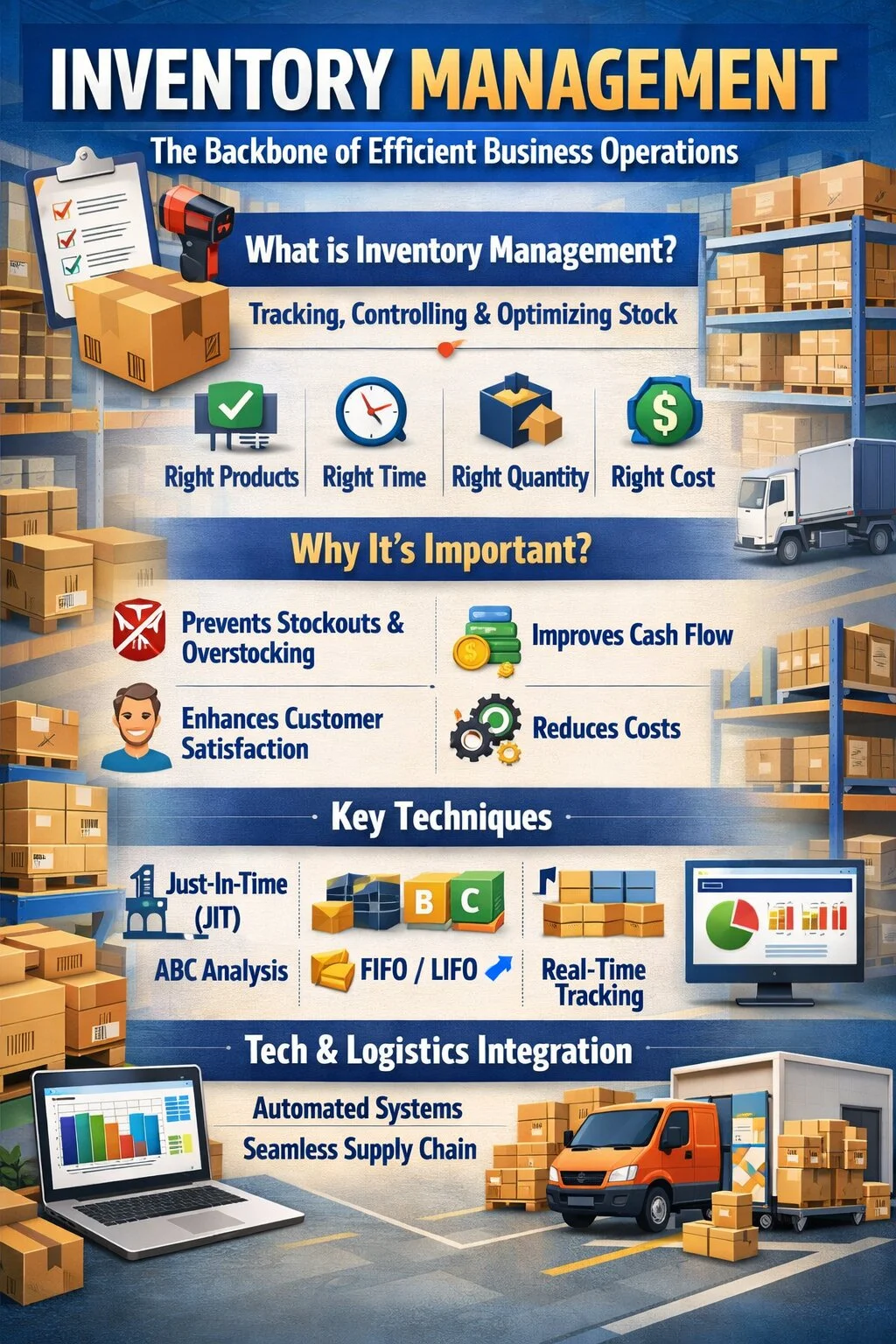
Inventory Management: The Backbone of Effective Business Operations
In moments’ presto-paced request, businesses can no longer go detainments, stockouts, or overstocking. This is where force operations play a critical part. Whether you run an eCommerce store, a storehouse, or a logistics company, managing your workforce efficiently can directly impact your profitability and client satisfaction.
What's Inventory Management?
- Force operation is the process of shadowing, controlling, and optimizing the storehouse and inflow of goods — from raw accoutrements to finished products.
- It ensures
- The right products are available
- At the right time
- In the right volume
- At the right cost
Why Inventory Management is Important
-
1. Prevents Stockouts & Overstocking
-
Running out of stock leads to lost deals, while redundant stock increases holding costs. A proper system balances both.
-
2. Improves Cash Flow
- force ties up capital. Effective operation ensures your plutocrat isn’t stuck in unsold goods.
-
3. Enhances client Satisfaction
- Faster order fulfillment and product vacancy lead to better client retention.
-
4. Reduces functional Costs
- Minimizes storehouse, destruction, and gratuitous running charges.
Key Features of Inventory Management Systems
-
✔️ Real- Time Tracking
- Examiner stock situations across storage incontinently.
-
✔️ Automated Stock Updates
- force gets streamlined automatically after every trade or return.
-
✔️ Demand soothsaying
- prognosticate unborn demand grounded on once deals trends.
-
✔️ Order Management Integration
- Sync with logistics systems for smooth dispatch and delivery.
-
✔️Multi-Warehouse Support
- Manage force across multiple locales from a single dashboard.
Types of Inventory Management ways
-
1. Just- In- Time( JIT)
- Stock is ordered only when demanded, reducing storehouse costs.
-
2. ABC Analysis
- Categorizes force grounded on value and significance
- A High value
- B Moderate value
- C Low value
-
3. FIFO( First In, First Out)
- Old force is vended first — ideal for perishable goods.
-
4. LIFO( Last In, First Out)
- Lately added force is vended first.
Challenges in Inventory Management
- Homemade crimes in tracking
- Lack of real- time visibility
- Demand oscillations
- Poor collaboration between the storehouse & logistics
- High return rates, especially in eCommerce
Part of Technology in Inventory Management
- Ultramodern businesses are shifting towards digital force systems that integrate with logistics platforms.
- Benefits include
- Automated workflows
- Reduced mortal error
- Faster order processing
- Data- driven decision making
- Integration with logistics platforms like smart shipping dashboards helps businesses manage both orders and deliveries in one place.
Stylish Practices for Effective Inventory Management
- Regular stock checkups
- Use force operation software
- Set reorder points
- dissect deals trends
- Optimize storehouse layout
- Integrate with logistics systems
Inventory Management in Logistics
- In logistics, force operation ensures
- Faster dispatch
- Reduced detainments
- Effective storehouse operations
- More shadowing of shipments
- A well- integrated system connects force, warehousing, and delivery, creating a flawless force chain.
Conclusion
Force operation isn't just about tracking stock — it’s about optimizing your entire business operation. With the right tools and strategies, businesses can reduce costs, improve effectiveness, and deliver a better client experience.
-
Call us 7665544470
-
Email us [email protected]